














Function of MPPT in Solar Street Lights | Advantages & Details
Discover the key role of MPPT controllers in modern solar street lighting systems. Learn how MPPT enhances charging efficiency, extends battery life, and supports smart energy management.
What is MPPT?
MPPT (Maximum Power Point Tracking) is an advanced algorithm used in solar charge controllers. It constantly adjusts the voltage and current to ensure the solar panel operates at its maximum power point for optimal energy conversion efficiency.
Key Functions of MPPT in Solar Street Lights
- Maximize Charging Efficiency: MPPT increases charging efficiency by 20%–30% compared to PWM controllers.
- Adapt to Complex Weather: MPPT performs well under cloudy, cold, or low-light conditions.
- Protect Battery System: It prevents overcharging, over-discharging, and overheating, especially ideal for lithium and LiFePO₄ batteries.
- Support Higher PV Voltage: Allows greater flexibility in panel layout and reduces power loss.
- Enable Smart Lighting Control: Often includes dimming, motion sensing, and remote control capabilities.
- Enhance System Stability: Ensures year-round functionality even in demanding environments.
- Reduce Maintenance Costs: Improves overall system lifespan, reducing the need for replacements.
MPPT vs PWM Controller Comparison
| Feature | MPPT Controller | PWM Controller |
|---|---|---|
| Charging Efficiency | 90–98% | 70–80% |
| Cost | Higher | Lower |
| Performance in Cloudy Weather | Excellent | Moderate |
| Voltage Matching Requirement | No strict matching | Strict voltage match needed |
| Battery Protection | Advanced | Basic |
| Suitable for High Power Systems | Yes | No |
Typical Applications of MPPT Controllers
- Smart city solar street lights
- Highway and arterial road lighting
- Industrial solar floodlights
- Campus and park lighting
- Hybrid wind-solar systems
FAQs about MPPT in Solar Street Lights
1. Is MPPT suitable for all solar lights?
It is ideal for systems over 30W such as street lights, garden lights, and industrial lights. PWM can be sufficient for small decorative lights.
2. Does MPPT work in cloudy or winter conditions?
Yes, MPPT performs significantly better than PWM under unstable lighting conditions.
3. How much more power can MPPT harvest than PWM?
MPPT typically improves charging efficiency by 20%–30%, depending on conditions.
4. Is MPPT necessary for LiFePO₄ batteries?
While not mandatory, MPPT offers more precise control and is strongly recommended for lithium battery systems.
5. Can MPPT controllers support remote monitoring?
Yes, most MPPT controllers support RS485, LoRa, or 4G modules for smart control and data access.
Conclusion
MPPT controllers are essential for maximizing performance, reliability, and intelligence in solar street lighting systems. Investing in MPPT pays off in efficiency, battery protection, and long-term savings—making them the smart choice for modern solar lighting applications.

Have more questions about our products or services?
The latest hot news you might like

Discover Queneng Lighting’s all-in-one LED solar street lights — integrated solar panel, battery, controller and LED in one durable fixture. Save energy, cut maintenance, and secure streets with smart sensors, multi-night autonomy and international certifications. Contact sales for quotes and support.

Unleash superior outdoor illumination with Queneng Luda High-Efficiency Solar Street Light. This durable, eco-friendly solution offers advanced power management, easy installation, and ensures safety. Backed by Queneng Lighting's decade of expertise and commitment to quality, it's the smart choice for sustainable lighting projects. Learn why we're a leading solar solutions provider.

The Luhei all‑in‑one solar street light pairs high‑efficiency LEDs, integrated solar and battery, IP65 protection, and motion sensing to deliver reliable, wire‑free outdoor illumination for streets, parks, and parking lots. Backed by Queneng Lighting’s certifications and support.

FAQ
Tourist Attractions and Resorts
How do solar lights perform in areas with limited sunlight?
Solar lights are designed to work efficiently even in areas with limited sunlight. Modern solar technology uses high-quality solar panels that can store energy even in cloudy or overcast conditions.
Solar Street Light Luhao
What is the energy efficiency of the Luhao solar street light?
The Luhao solar street light is highly energy-efficient, using solar panels to convert sunlight into electricity without relying on grid power. The LED lights consume very little energy compared to traditional street lights, making them both cost-effective and eco-friendly.
Solar Street Light Luhua
What is the main advantage of using Luhua Smart Solar Street Lights over traditional street lights?
The main advantage of Luhua Smart Solar Street Lights is their reliance on renewable solar energy, which reduces dependency on the electrical grid. This makes them not only more eco-friendly but also more cost-effective in the long term. Additionally, the smart features such as motion detection and adaptive brightness make them highly energy-efficient compared to conventional street lights.
Industry
Will the solar street lights work effectively in winter or during low sunlight conditions?
Queneng’s solar lights are equipped with high-capacity batteries, ensuring normal illumination even in low-light conditions, making them ideal for regions with frequent winter or rainy weather.
Battery and Analysis
Do batteries need to be fully charged for long-term storage?
Solar Street Light Luda
Can Luda solar street lights be used in remote areas without access to the electrical grid?
Yes, Luda solar street lights are perfect for remote areas without access to the electrical grid. Since they operate entirely on solar energy, they do not require any external wiring or connection to the power grid. This makes them an ideal solution for rural roads, remote pathways, and areas lacking infrastructure.
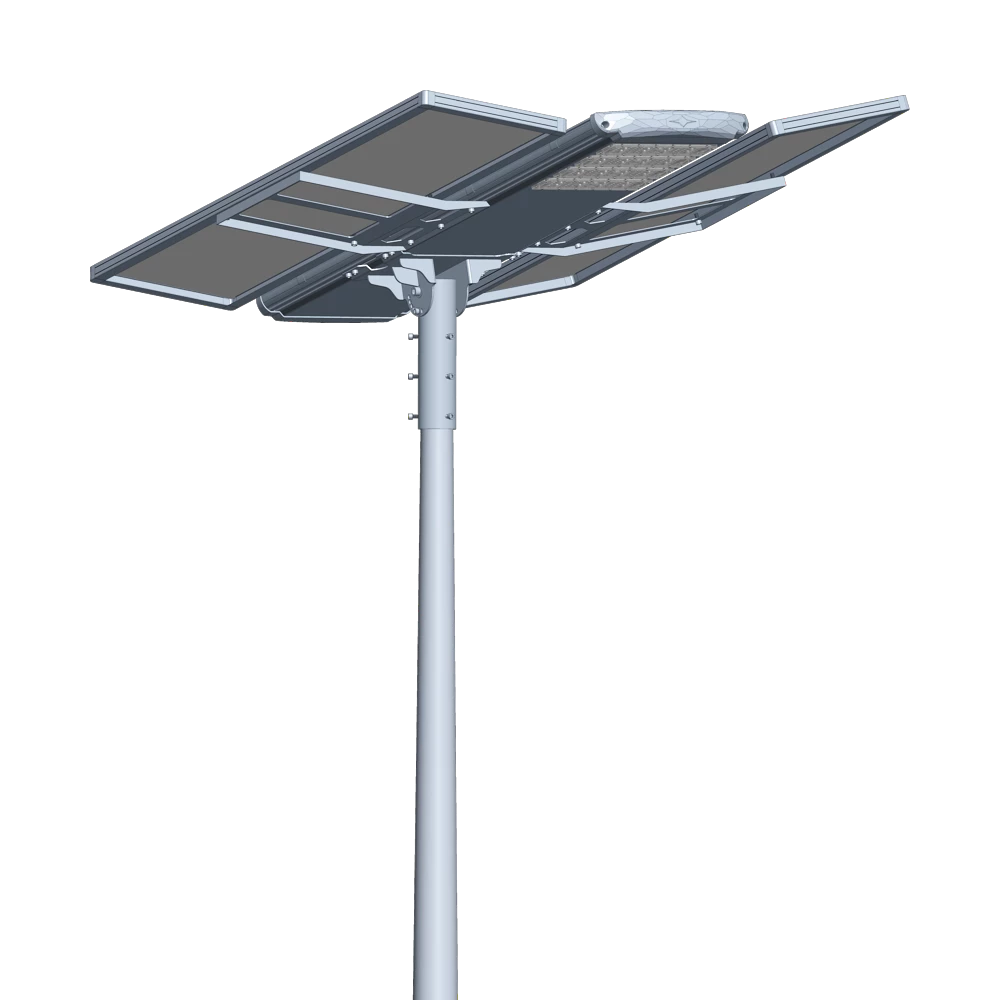
Introducing the Luqing Solar Street Light by Queneng, Efficient LED lighting powered by solar energy is perfect for illuminating outdoor areas. Harness the power of solar energy for sustainable, reliable street lighting. Ideal for eco-friendly, cost-effective outdoor illumination solutions.
If you would like more information about Queneng solar lighting solutions, please send us a message by filling out the form below. Our professional team will get back to you within 24 hours!
Rest assured that your privacy is important to us, and all information provided will be handled with the utmost confidentiality.
Schedule a Meeting
Book a date and time that is convenient for you and conduct the session in advance.
Have more questions about our products or services?
The messenger of light & power conversion
Environmental protection and intelligent manufacturing are our brand philosophy, and quality assurance and the best user experience are our eternal promises to users.
CONTACT
No.9F, Building F, Cao San Xin Tian Hong Logistics Park, Guzhen Town, Zhongshan City, Guangdong Province, China.
or write [email protected]
WhatsApp: +86 136 2270 1011


