














What Factors Should Be Considered When Planning a Solar Street Light Project | Expert Guide
Discover the key factors to consider when planning a solar street light project, including location analysis, lighting requirements, component selection, budget planning, and maintenance strategies.
With the rise of green energy and smart city development, solar street lighting has become an essential solution in public lighting due to its energy efficiency, low maintenance, and easy installation.
As a leading solar lighting solutions provider with over a decade of experience, GuangDong Queneng Lighting Technology Co., Ltd. (Queneng) has successfully delivered projects worldwide. Our expertise ensures every project is scientifically planned for optimal performance.
In this article, we share key factors—based on both industry standards and Queneng's engineering practices—to help you plan a successful solar street lighting project.
1️⃣ Define Project Scope and Objectives
Before diving into technical specs, clarify the project scope:
- Where will the lights be installed? (urban streets, rural roads, pathways, parks, campuses, commercial plazas, smart parks, etc.)
- What is the lighting purpose? (safety, traffic, security, decorative lighting)
- How many lights are needed?
- What is the expected lighting coverage area?
- Is it an off-grid project? Is there backup power?
- What is the budget?
Queneng’s team assists clients through detailed demand analysis, site surveys, and clear goal setting.
2️⃣ Conduct Site Assessment
Solar Resource Availability
Analyze annual solar radiation data to ensure sufficient sunlight. Queneng provides customized configurations based on diverse climate zones worldwide.
Shading Analysis
Identify obstacles (trees, buildings) that may block sunlight. Ensure optimal solar panel exposure.
Geographic Conditions
For coastal, high-wind, or extreme temperature zones, Queneng designs weather-resistant poles and components to ensure reliable performance.
3️⃣ Define Lighting Requirements
Illumination Levels
- Main roads: ≥ 20-30 lux
- Secondary streets: ≥ 10-15 lux
- Parks/walkways: ≥ 5-10 lux
Our lighting design team at Queneng offers simulation models to visualize and optimize lighting effects.
Light Distribution
Select suitable lenses and optical configurations for uniform lighting.
Operation Time
- Full night (dusk to dawn)
- Half-night energy-saving mode
- Programmable schedules (with Queneng smart lighting control system—supports remote control via app)
4️⃣ Select Quality Components
Queneng strictly adheres to ISO 9001 quality standards and holds CE, UL, TÜV, BIS, CB, SGS certifications.
Solar Panels
High-efficiency monocrystalline panels, ≥ 21% conversion efficiency.
Batteries
LiFePO₄ batteries, ≥ 3000 cycles lifespan, ≥ 5-day autonomy.
LED Light Source
Top-brand high-efficacy LED chips, ≥ 150 lm/W, intelligent constant current drivers.
Controller
High-performance MPPT controllers with intelligent dimming, battery protection, remote monitoring.
Light Poles
Hot-dip galvanized steel/aluminum alloy poles, C4 corrosion resistance, wind resistance up to 12 levels.
5️⃣ Budget Planning and Cost Control
Through intelligent design, Queneng helps clients achieve optimal ROI:
- High-quality equipment + optimized design = reduced lifecycle cost
- Flexible solutions for various budget levels (standard, advanced smart, landscape-focused)
6️⃣ Installation Considerations
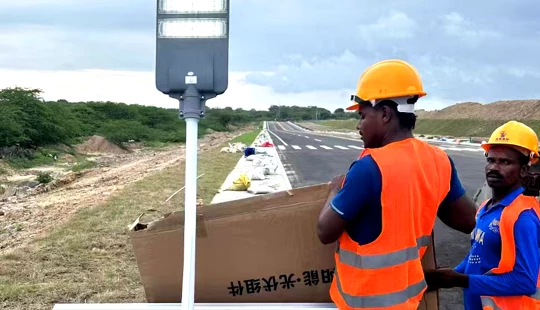
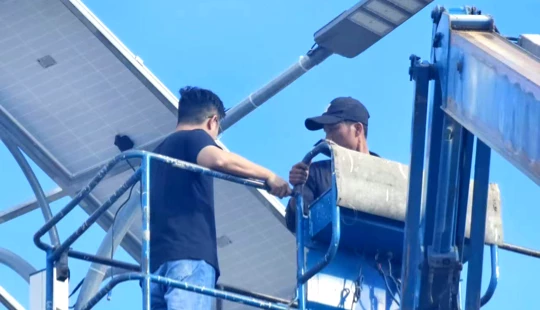
Our Queneng engineering team provides global project installation services and technical support.
- Proper pole spacing to avoid shading and ensure uniform illumination.
- Safe, standardized installation process.
- Customized pole foundation design based on soil and wind load.
7️⃣ Maintenance Planning
Queneng designs its systems for long-term low maintenance:
- Clean solar panels every 6–12 months.
- Check battery health annually.
- Inspect pole and electrical connections.
- Utilize remote smart monitoring platform for proactive maintenance.
8️⃣ Compliance and Standards
Queneng lighting solutions fully comply with international and local standards:
- Light pollution control
- Road safety lighting standards
- Structural and electrical safety standards
- Complete product test reports and certifications provided
-
Conclusion
A successful solar street lighting project requires a holistic approach covering:
- Demand analysis
- Site assessment
- Lighting design
- Component selection
- Scientific installation
- Smart operation and maintenance
- Compliance with regulations
With extensive experience and global project references, Queneng offers tailor-made solar lighting solutions that deliver long-term reliability and value.
Contact us today to receive a free lighting design consultation and expert technical advice!
FAQ
Q1: How many solar street lights do I need?
A: Through lighting simulation and design, Queneng helps clients determine the optimal number of lights.
Q2: What is the most reliable battery for solar street lights?
A: LiFePO₄ batteries offer the best performance, safety, and longevity.
Q3: Will solar street lights work during cloudy weather?
A: Yes. Queneng designs its systems with ≥ 5-day battery autonomy to ensure reliable lighting during cloudy periods.
Q4: How often should I maintain Queneng solar street lights?
A: We recommend basic maintenance every 6–12 months. Our goal is 3–5 years minimal maintenance design.

Have more questions about our products or services?
The latest hot news you might like

Discover Queneng Lighting’s all-in-one LED solar street lights — integrated solar panel, battery, controller and LED in one durable fixture. Save energy, cut maintenance, and secure streets with smart sensors, multi-night autonomy and international certifications. Contact sales for quotes and support.

Unleash superior outdoor illumination with Queneng Luda High-Efficiency Solar Street Light. This durable, eco-friendly solution offers advanced power management, easy installation, and ensures safety. Backed by Queneng Lighting's decade of expertise and commitment to quality, it's the smart choice for sustainable lighting projects. Learn why we're a leading solar solutions provider.

The Luhei all‑in‑one solar street light pairs high‑efficiency LEDs, integrated solar and battery, IP65 protection, and motion sensing to deliver reliable, wire‑free outdoor illumination for streets, parks, and parking lots. Backed by Queneng Lighting’s certifications and support.

FAQ
Industry
If the battery capacity decreases, does Queneng offer replacement services?
Yes, we offer long-term maintenance support for all solar systems, including battery replacements and system upgrades to ensure ongoing high performance.
Solar Street Light Chuanqi
How do Chuanqi solar street lights differ from traditional street lights?
Chuanqi solar street lights are powered by solar energy, making them a sustainable and eco-friendly alternative to traditional street lights that rely on the electrical grid. They use energy-efficient LED technology that reduces electricity consumption while providing reliable, bright lighting. Unlike traditional lights, Chuanqi solar street lights operate independently of the grid, reducing installation costs and maintenance.
Schools and Educational Institutions
Do the solar lights come with a timer or automatic on/off function?
Yes, many of our solar lighting systems come with built-in timers or automatic sensors, allowing them to turn on at dusk and off at dawn, or based on a set schedule.
Battery Performance and Testing
What is a vibration experiment?
After the battery is discharged to 1.0V at 0.2C, charge it at 0.1C for 16 hours. After leaving it aside for 24 hours, it vibrates according to the following conditions:
Amplitude: 0.8mm
Make the battery vibrate between 10HZ-55HZ, increasing or decreasing at a vibration rate of 1HZ every minute.
The battery voltage change should be within ±0.02V, and the internal resistance change should be within ±5mΩ. (Vibration time is 90min)
The lithium battery vibration experiment method is:
After the battery is discharged to 3.0V at 0.2C, charge it to 4.2V with 1C constant current and constant voltage, with a cut-off current of 10mA. After leaving it aside for 24 hours, it vibrates according to the following conditions:
The vibration experiment was carried out with the vibration frequency from 10 Hz to 60 Hz and then to 10 Hz within 5 minutes as a cycle with an amplitude of 0.06 inches. The battery vibrates in three axes, each axis vibrating for half an hour.
The battery voltage change should be within ±0.02V, and the internal resistance change should be within ±5mΩ.
What is the internal pressure of the battery?
For example, overcharge, positive electrode: 4OH- - 4e → 2H2O + O2↑;
①The generated oxygen reacts with the hydrogen precipitated on the negative electrode to form water 2H2 + O2 → 2H2O
②If the speed of reaction ② is lower than the speed of reaction ①, the oxygen produced will not be consumed in time, which will cause the internal pressure of the battery to increase.
Solar Street Light Luxian
How do Luxian solar street lights contribute to reducing carbon emissions?
By using solar power as their energy source, Luxian solar street lights reduce reliance on fossil fuels for electricity generation. This contributes to lower carbon emissions, helping mitigate climate change and promoting environmental sustainability. Their energy efficiency further reduces the overall carbon footprint of lighting systems.
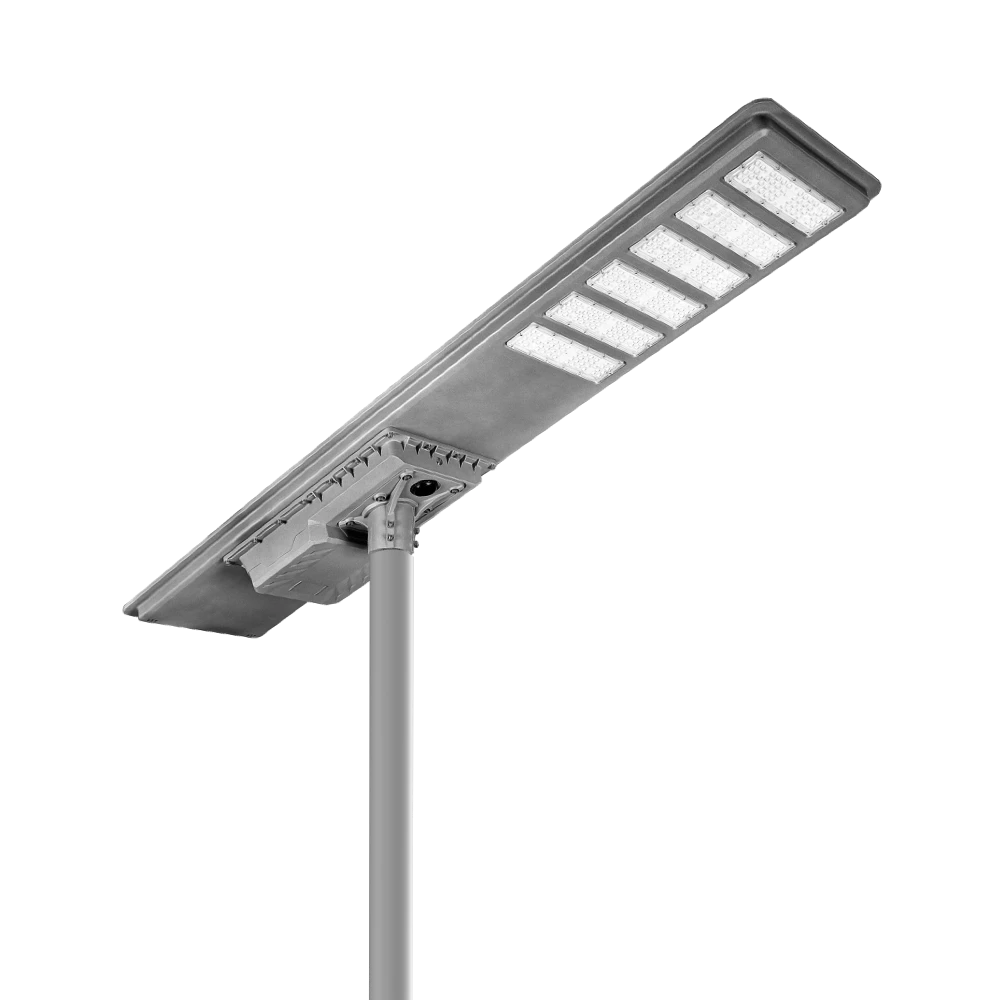
Queneng's Luqiu Innovative Solar Street Light offers energy-saving, durable outdoor lighting. This solar power street light provides a reliable and eco-friendly solution for illuminating your streets and pathways.
If you would like more information about Queneng solar lighting solutions, please send us a message by filling out the form below. Our professional team will get back to you within 24 hours!
Rest assured that your privacy is important to us, and all information provided will be handled with the utmost confidentiality.
Schedule a Meeting
Book a date and time that is convenient for you and conduct the session in advance.
Have more questions about our products or services?
The messenger of light & power conversion
Environmental protection and intelligent manufacturing are our brand philosophy, and quality assurance and the best user experience are our eternal promises to users.
CONTACT
No.9F, Building F, Cao San Xin Tian Hong Logistics Park, Guzhen Town, Zhongshan City, Guangdong Province, China.
or write [email protected]
WhatsApp: +86 136 2270 1011


