














Things You Didn't Know About Solar Street Lights | Queneng
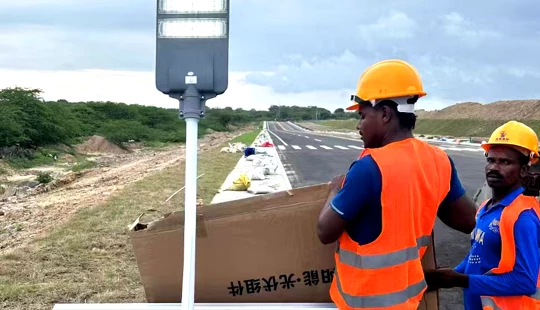
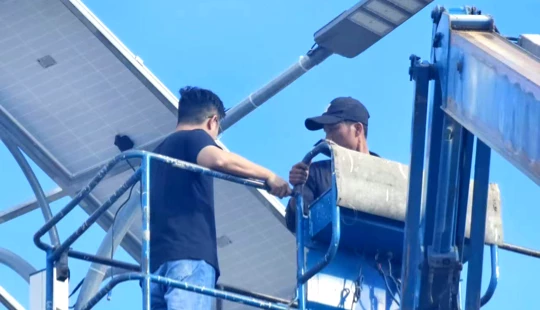
Solar street lights are an environmentally-friendly lighting solution that converts solar energy into electrical power to illuminate streets and public spaces. These lighting systems use crystalline silicon solar panels to capture solar energy, which is then stored in a sealed gel battery. The stored energy is used to power LED lights, ensuring reliable illumination during the night. With a lifespan of up to 100,000 hours, LED solar lighting offers significant energy savings and long-term performance.
Unlike traditional street lighting, solar powered lights do not rely on the electrical grid, making installation easier and reducing maintenance costs. Solar street lights are ideal for smart cities, urban streets, parks, and remote locations that do not have access to electricity grids. These lights come with intelligent controllers that adjust brightness based on environmental conditions, prolonging battery life while optimizing energy usage.
As the world increasingly focuses on green energy and sustainable development, solar energy solutions like Solar street lighting is gaining widespread adoption. These systems not only provide clean, renewable energy but also help reduce carbon emissions and support energy efficiency goals.
Things You Didn't Know About Solar Street Lights...
01. What is Solar Energy?
Solar energy refers to the heat radiation from the sun, primarily in the form of sunlight. Since the beginning of life on Earth, solar energy has been the primary source of heat radiation for all living organisms. Humans have long used sunlight for drying items and preparing food, such as making salt and drying fish.
As fossil fuels become scarcer, solar energy has become an important part of humanity’s energy usage and is continuously being developed. The two main forms of solar energy use are solar thermal conversion and photovoltaic (solar power) conversion. Solar power, as a renewable energy source, will remain an ideal energy source for billions of years.
02. What is a Solar Street Light?
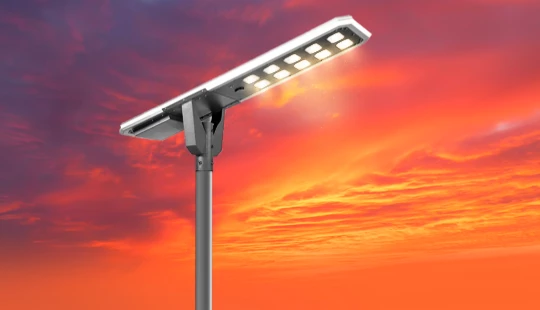
A solar street light is a lighting system that is powered by crystalline silicon solar cells. It stores electrical energy in a maintenance-free sealed gel battery (also called a colloidal battery) and uses high-efficiency LED lights as the light source, controlled by an intelligent charge and discharge controller. This system replaces traditional public lighting and is both energy-efficient and environmentally friendly.
03. How Does a Solar Street Light Work?
- During the Day: The solar panels, controlled by an intelligent controller, absorb sunlight and convert it into electricity. During the day, the solar panel charges the battery pack.
- At Night: The battery pack powers the LED lights, providing illumination.
- Smart Controller: Ensures the battery pack is not overcharged or discharged. The controller also includes features such as light control, time control, temperature compensation, lightning protection, and reverse polarity protection.
04. Components of a Solar Street Light
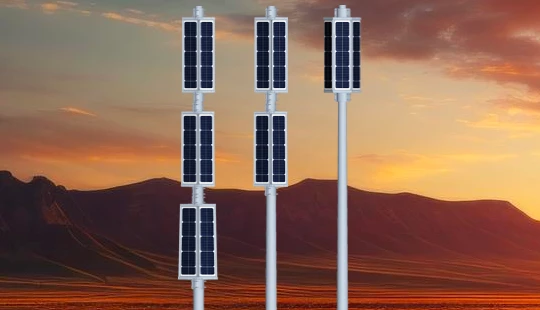
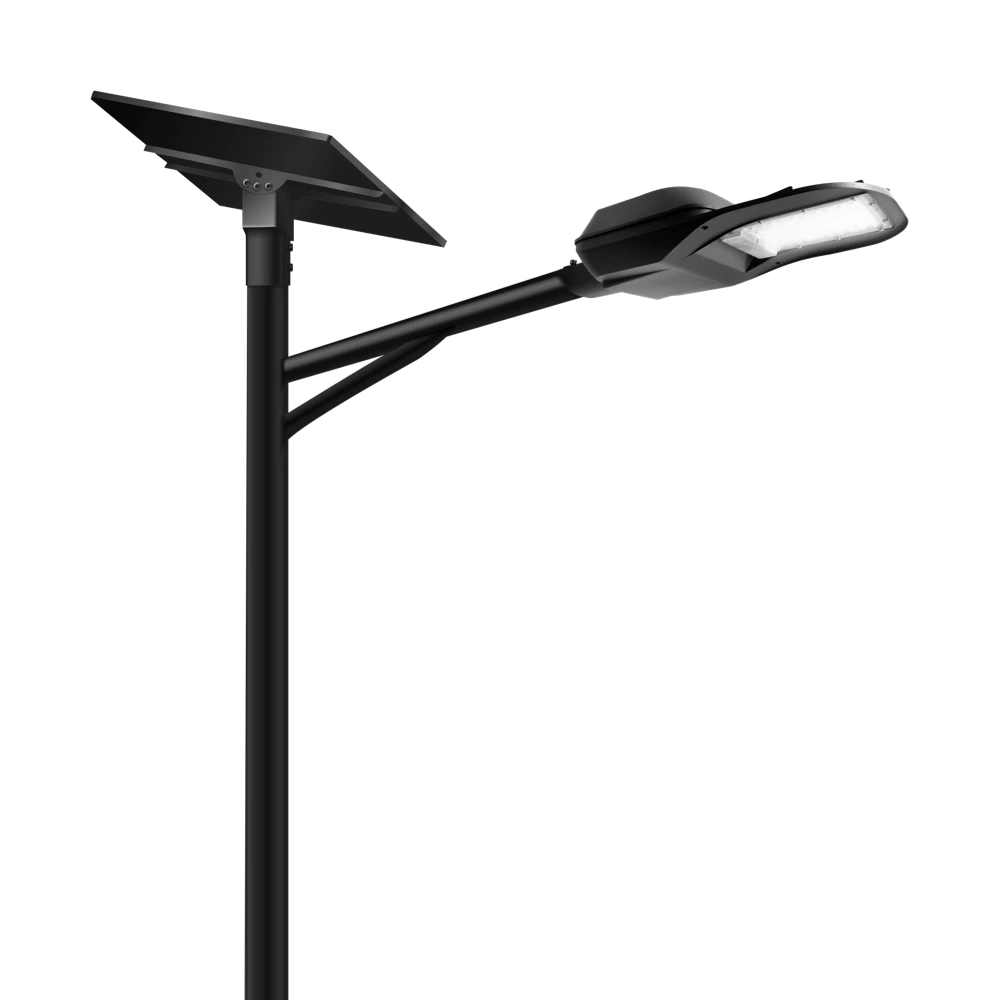
- Solar Panel
The solar panel is the core component of the solar street light, responsible for converting sunlight into electrical energy. Most solar panels are made from monocrystalline silicon, working similarly to the P-N junction in diodes. - Solar Controller
The solar controller is crucial in the solar lighting system as it directly impacts the lifespan of the system, especially the battery. It measures temperature, battery voltage, and other parameters to control various functions and protect the system. - Battery
Solar street lights typically include a battery (such as lead-acid, Ni-Cd, or Ni-MH batteries) to ensure that the system works when sunlight is insufficient. The battery capacity should be higher than the daily energy consumption of the light. - Light Source
LED lights are commonly used in solar street lights due to their long lifespan, low operating voltage, and high luminous efficiency. LED technology is expected to improve further, making it a future trend in solar street lighting. - Lamp Pole and Fixture
The height of the lamp pole is determined by the road width and required illumination. The fixture is designed to balance aesthetics and energy efficiency, usually focusing on practicality and cost-effectiveness.
05. Features of Solar Street Lights
- Energy-Efficient: Solar energy is virtually limitless and provides free electricity.
- Eco-Friendly: No pollution, no noise, and no radiation.
- Safe: There is no risk of electric shock or fire hazards.
- Convenient: Easy installation without the need for wiring or complex construction, and no concerns about power outages.
- Long Lifespan: Solar street lights feature high-tech control systems and reliable international brand components, ensuring long-lasting quality.
- Premium Appearance: These systems enhance the image of technology and sustainability, boosting the prestige of using entities.
- Low Investment: The initial cost of solar street lighting is similar to traditional electrical systems, but there are no ongoing electricity costs, offering significant long-term savings.
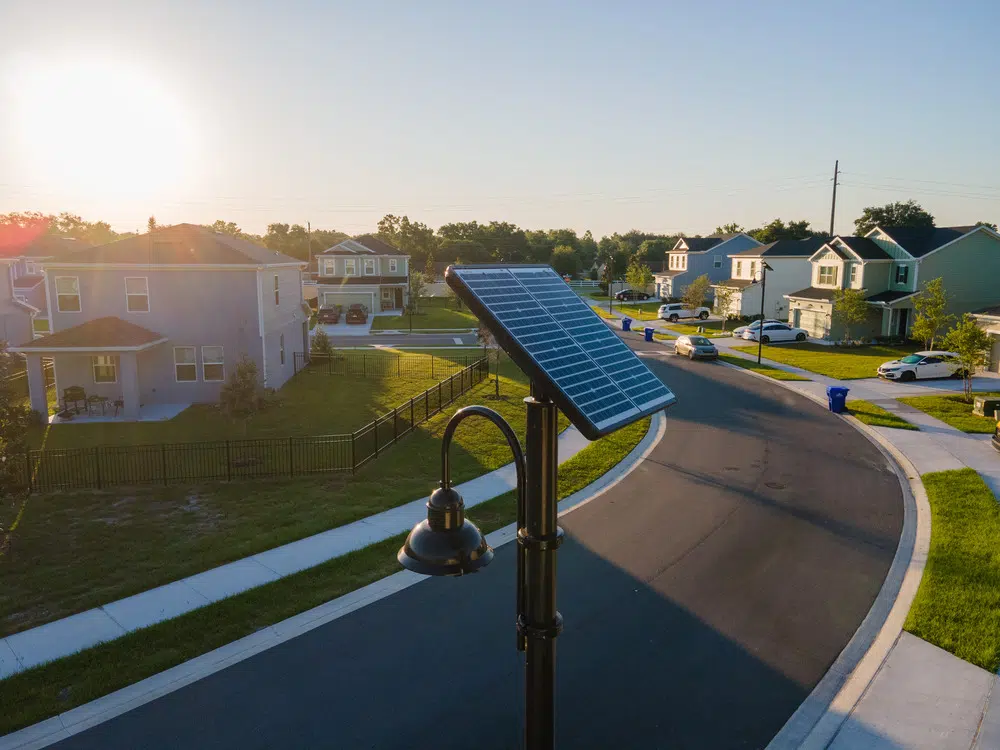
Solar Street Lights: Little-Known Facts
- Smart Control
The intelligent system in solar street lights can automatically adjust the brightness based on weather conditions. For example, on cloudy days, the brightness is increased, while on sunny days, it’s reduced or turned off to save energy and extend battery life. - Diverse Designs
In addition to traditional street lighting, solar street lights are being designed to serve multiple functions, such as integrating advertising panels, landscape lighting, or even charging stations. - Durability in Harsh Weather
Solar street lights are designed to withstand harsh conditions, such as high winds, heavy rain, and corrosive environments, ensuring stable performance under extreme weather conditions. - Wide Range of Applications
Besides urban streets and parks, solar street lights are also widely used in remote areas, such as mountain regions, deserts, and islands, where traditional electricity grids are not available, providing reliable illumination in off-grid locations. - Low Maintenance Costs
Solar street lights require minimal maintenance. Once installed, they can run for extended periods without needing attention unless the battery needs replacement or physical damage occurs.
Conclusion
Solar street lights are an eco-friendly, energy-efficient, and safe lighting solution. They are not only suitable for urban streets but also provide a sustainable lighting option for remote regions. As energy demand grows, solar street lights offer a future-oriented alternative for urban lighting solutions.

Have more questions about our products or services?
The latest hot news you might like

Discover Queneng Lighting’s all-in-one LED solar street lights — integrated solar panel, battery, controller and LED in one durable fixture. Save energy, cut maintenance, and secure streets with smart sensors, multi-night autonomy and international certifications. Contact sales for quotes and support.

Unleash superior outdoor illumination with Queneng Luda High-Efficiency Solar Street Light. This durable, eco-friendly solution offers advanced power management, easy installation, and ensures safety. Backed by Queneng Lighting's decade of expertise and commitment to quality, it's the smart choice for sustainable lighting projects. Learn why we're a leading solar solutions provider.

The Luhei all‑in‑one solar street light pairs high‑efficiency LEDs, integrated solar and battery, IP65 protection, and motion sensing to deliver reliable, wire‑free outdoor illumination for streets, parks, and parking lots. Backed by Queneng Lighting’s certifications and support.

FAQ
APMS system
How is the ultra-low temperature control function of the APMS system achieved?
The APMS system uses a specially designed control module that maintains stable operation at extremely low temperatures, ensuring reliability even at -50°C.
Solar Street Light Luan
What makes Luan solar street lights high-efficiency?
Luan solar street lights are equipped with advanced high-efficiency solar panels and LED technology. The panels capture solar energy effectively, even under low light conditions, while the energy-efficient LEDs provide bright illumination with minimal power consumption, ensuring long-lasting performance.
Solar Street Light Lufeng
What type of LED technology does Lufeng solar street lights use?
Lufeng solar street lights use advanced LED technology, which provides bright, high-quality illumination while consuming less power compared to traditional street lights. LEDs are more energy-efficient, have a longer lifespan, and require less maintenance, making them ideal for outdoor lighting applications.
Battery Performance and Testing
What are the main aspects of performance commonly referred to as secondary batteries?
Sustainability
What is the wind resistance rating of Queneng solar street lights?
Our solar street lights are rigorously tested and can withstand wind speeds of up to 120 km/h. For areas with particularly strong winds, we offer customized solutions to enhance wind resistance.
Solar Street Light Luqing
What kind of maintenance does the solar street light require?
Solar street lights are designed for low maintenance. The primary maintenance task is to ensure the solar panels are clean and free of debris to optimize their charging efficiency. Periodic checks of the battery and LED performance may also be necessary to ensure long-term functionality.
If you would like more information about Queneng solar lighting solutions, please send us a message by filling out the form below. Our professional team will get back to you within 24 hours!
Rest assured that your privacy is important to us, and all information provided will be handled with the utmost confidentiality.
Schedule a Meeting
Book a date and time that is convenient for you and conduct the session in advance.
Have more questions about our products or services?
The messenger of light & power conversion
Environmental protection and intelligent manufacturing are our brand philosophy, and quality assurance and the best user experience are our eternal promises to users.
CONTACT
No.9F, Building F, Cao San Xin Tian Hong Logistics Park, Guzhen Town, Zhongshan City, Guangdong Province, China.
or write [email protected]
WhatsApp: +86 136 2270 1011


